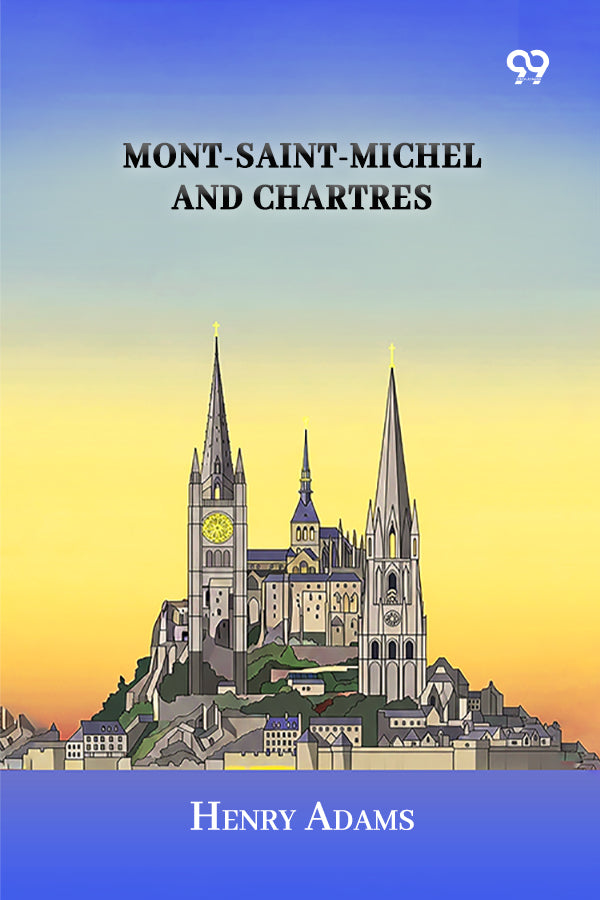
Mont-saint-michel and chartres offers a meditative journey through the spiritual and artistic legacy of medieval Europe, centering on two landmarks. The narrative unfolds as a reflective pilgrimage, tracing the symbolic and architectural significance of Mont-Saint-Michel’s solitary abbey, then moving to the radiant depths of the Chartres cathedral. Themes of unity, devotion, and the harmony between faith and creative achievement are woven throughout the exploration, revealing how these sites embodied the values and aspirations of their era. Each structure becomes a lens for understanding the culture’s connection with both divine inspiration and artistic mastery. Through evocative descriptions and careful historical context, the book invites readers into the world of chivalry, reverence, and intellectual quest, where the synthesis of philosophy, theology, and art shaped enduring monuments of human vision. The narrative highlights how both places serve not just as relics of brick and stone, but as living testimonies to belief, resilience, and the beauty found at the intersection of faith and imagination.
Henry Adams was an American historian, writer, and intellectual born in 1838 into the influential Adams political family, which included two U.S. presidents among his ancestors. Educated at Harvard College and later at the University of Berlin, he began his professional life as private secretary to his father, Charles Francis Adams Sr., during his diplomatic posting in the United Kingdom under President Lincoln. This experience exposed him to European politics and culture and shaped his early worldview. After the Civil War, Adams pursued a career in journalism and academia, becoming a respected voice in political commentary and historical analysis. He was known for his critical thinking, sharp literary style, and deep engagement with the social and political dynamics of 19th-century America. Among his most acclaimed works are The History of the United States of America 1801–1817, a comprehensive nine-volume history, and The Education of Henry Adams, a reflective memoir that won the Pulitzer Prize posthumously. His writing combined historical insight with philosophical depth, capturing the complexities of a world undergoing rapid transformation. He died in Washington, D.C., in 1918.




![Truth [Verite] Book I](http://www.double9books.com/cdn/shop/files/9789368098935_300179e1-8196-45a7-a5e3-156d28267b73.jpg?v=1742824179&width=200)


